

Expanding Access to Architectural Guidance After Destruction
A curated, open catalogue of reconstruction guidance for households rebuilding in South Lebanon.
An overview of the initiative, how it works, and where it stands.
Stakeholder overview
01 The condition
Reconstruction rarely begins with a comprehensive plan.
It begins when people return.
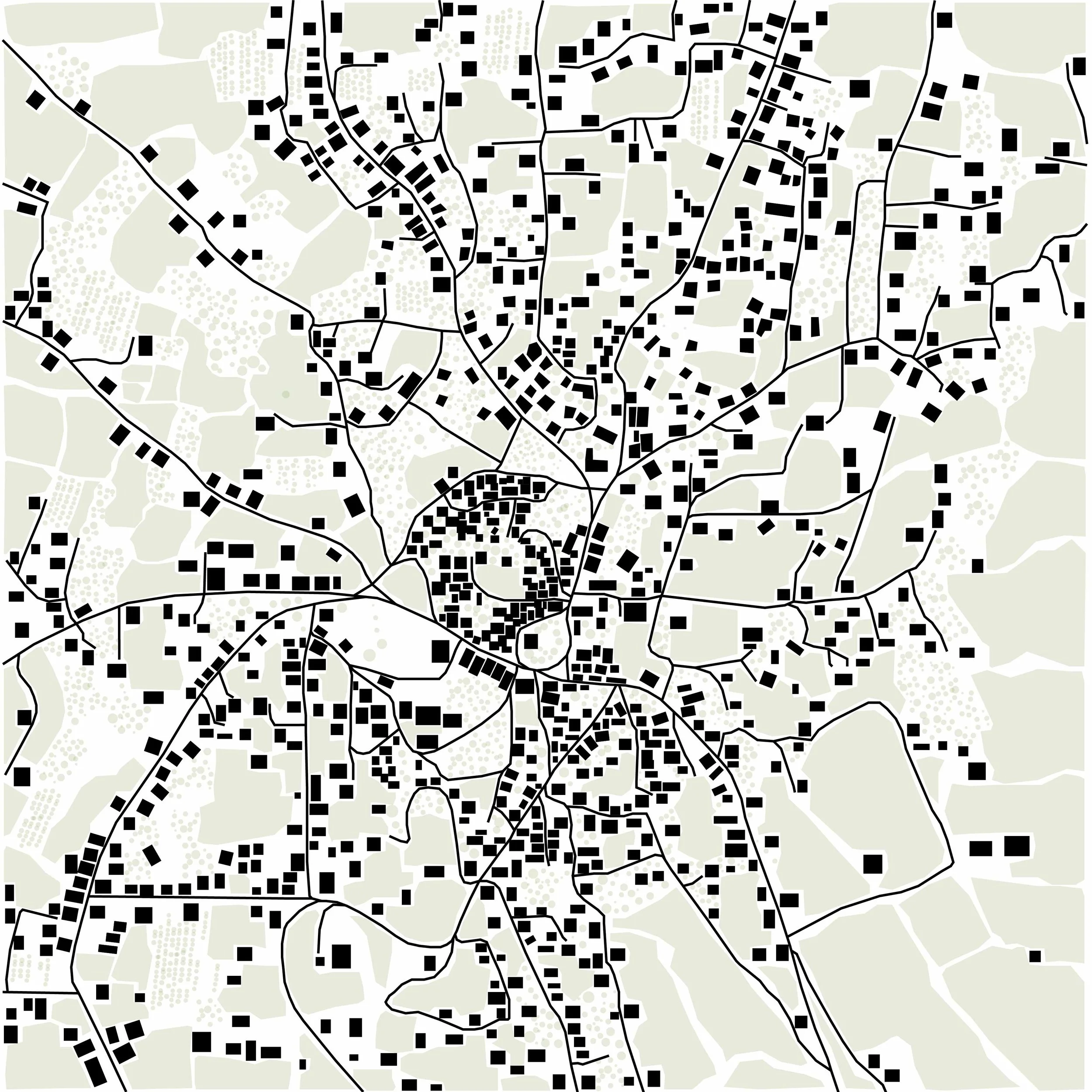
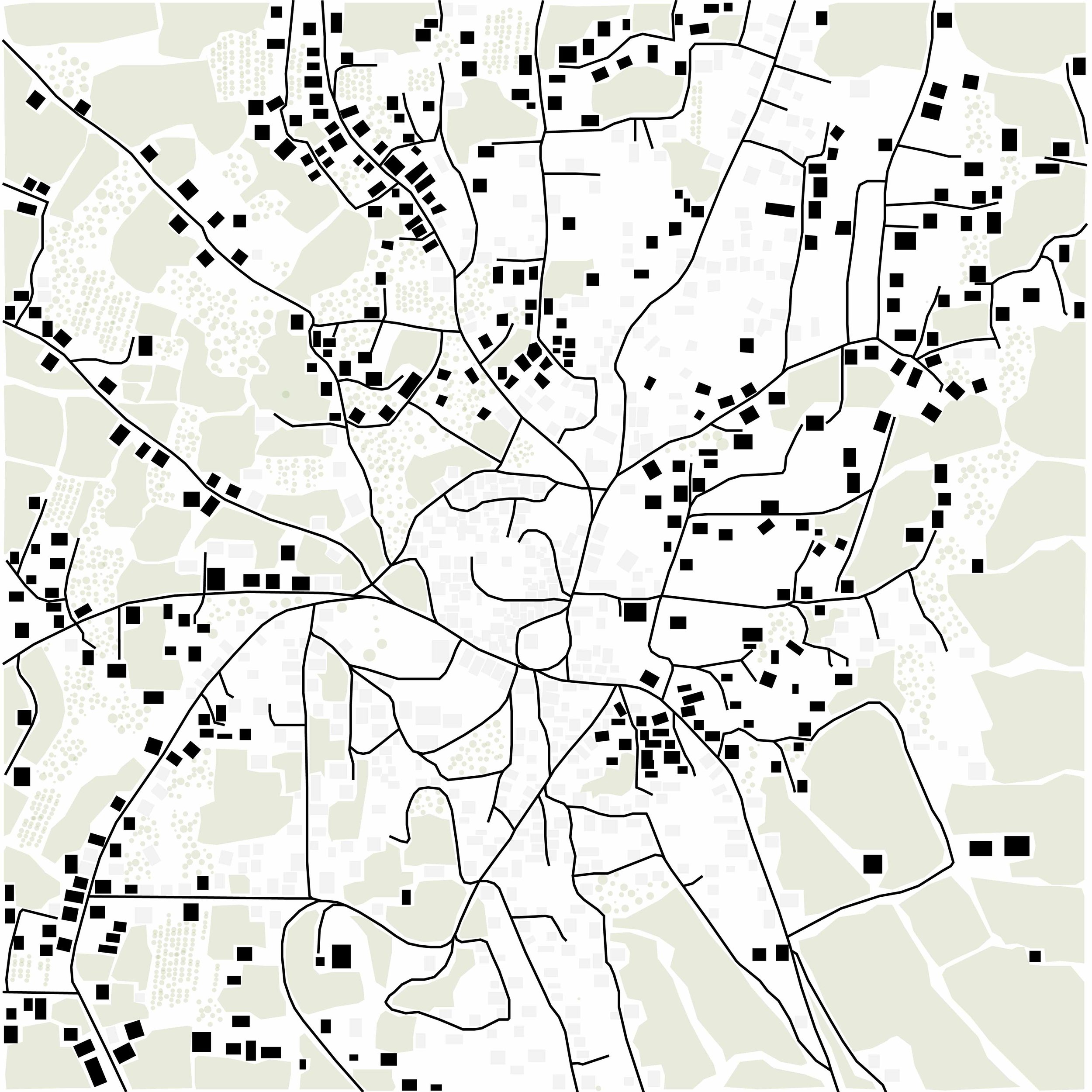
Households return to damaged homes, cleared plots, partially standing structures, and neighborhoods shaped by destruction. Decisions about repair, rebuilding, expansion, materials, and construction are often made long before formal reconstruction frameworks, funding mechanisms, or technical support systems fully materialize.
This period between destruction and organized reconstruction is where much of the built environment is ultimately shaped. The decisions made during this time frequently determine how people will live for years, and often generations, to come.
Architecture for Return was developed in response to this condition.
1.5km
Taybeh, South Lebanon
02 The gap
While reconstruction is often discussed at the scale of institutions, funding programs, and recovery plans, rebuilding frequently takes place at the scale of individual households and local communities.
At this level, construction capacity often exists. Local builders, tradespeople, suppliers, and community networks are already present and actively engaged in rebuilding. What remains less accessible is architectural guidance that can help inform rebuilding decisions before construction begins.
As a result, decisions are often shaped by what is immediately available: familiar building methods, existing precedents, available labor, time pressures, and financial constraints. These are not failures of intent. They are decisions made under real conditions and with limited access to alternative possibilities.
Architecture for Return exists to make architectural guidance accessible during this period, to the people making rebuilding decisions.
03 The initiative
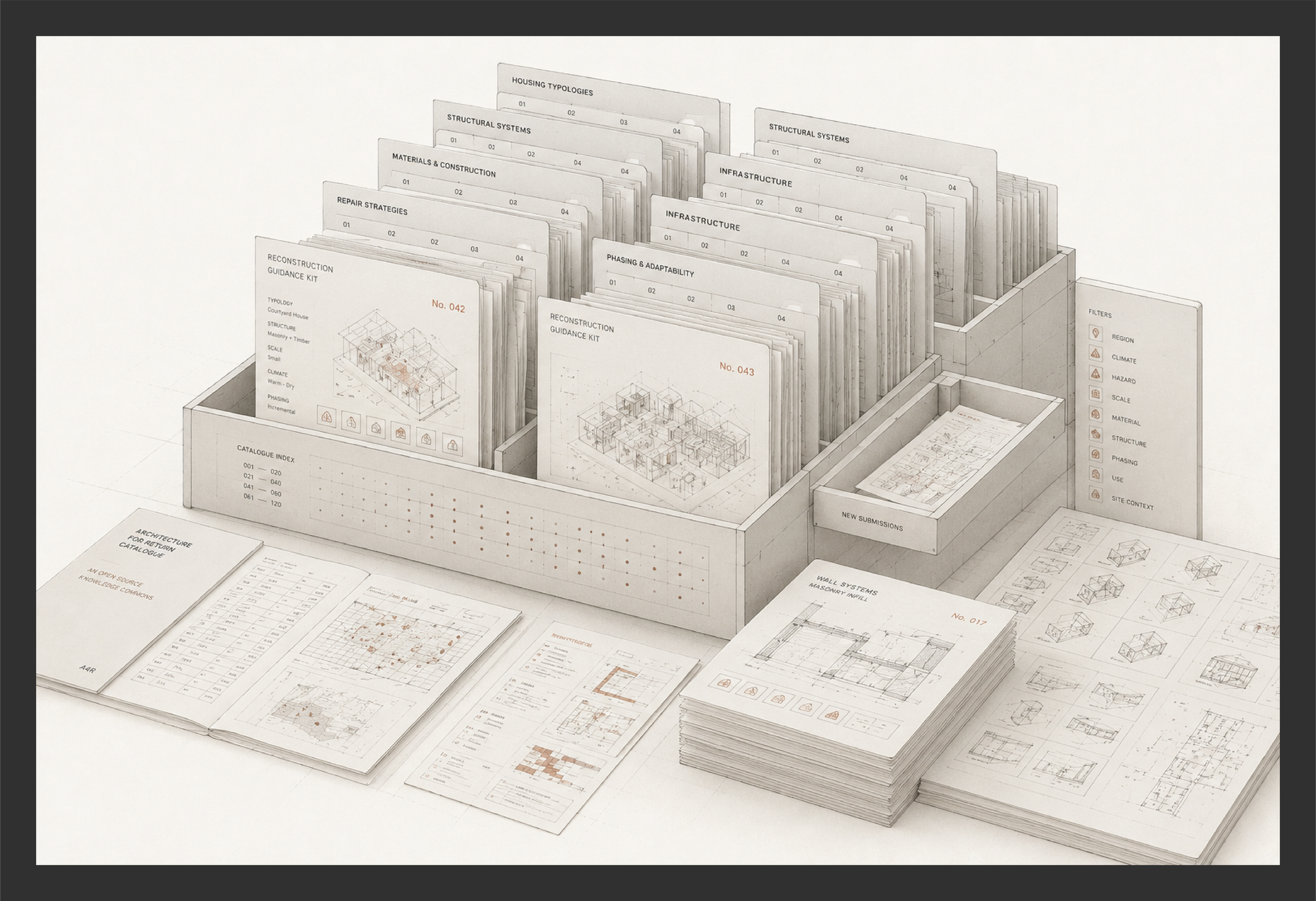
Architecture for Return is a curated, open catalogue of reconstruction guidance.
The catalogue is built from reconstruction guidance kits. Each kit takes a real rebuilding scenario, a type of plot, a budget, a household, a level of existing structure, and works it through to architectural guidance a returning household can use.
The kits are not collected from an open pool. Architecture for Return identifies what the catalogue needs, then commissions a selected architect or expert to address each scenario. Contributors are chosen, not self-nominated, and every kit is credited in full to its author.
The catalogue grows scenario by scenario, building toward a body of guidance that covers the real range of conditions households face when they return.
04 how it works

Architecture for Return does not propose a single reconstruction solution. The catalogue is commissioned scenario by scenario, so that multiple approaches and forms of expertise stand alongside one another. The objective is not uniformity, but the availability of informed guidance.
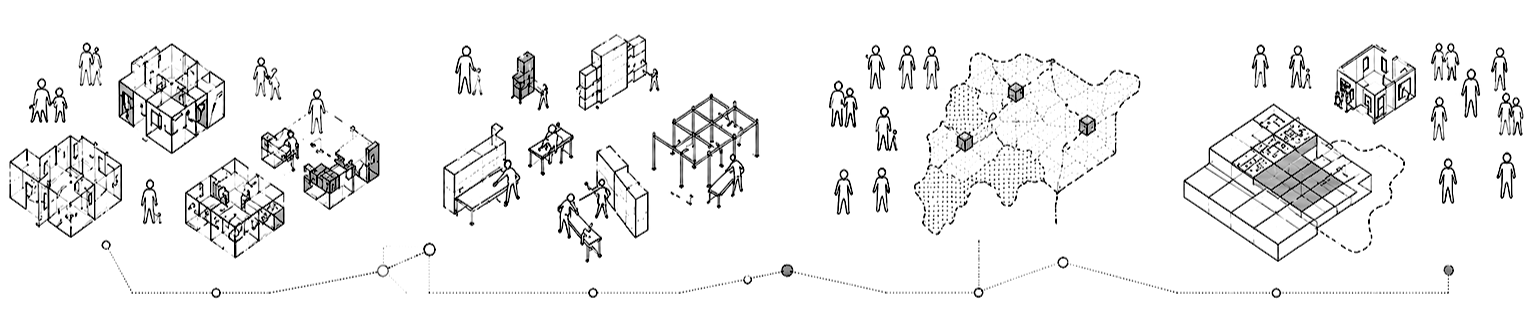
commission
Selected architects are commissioned to address the different scenarios returning households face, building a catalogue of real conditions.
PUBLISH
Each kit is developed, refined, and published in the open catalogue, credited to its author.
REACH
The guidance reaches households on the ground, through the municipalities, field teams, NGOs, and local contractors carrying out reconstruction
05 why it matters
Reconstruction decisions are often made before comprehensive plans, funding mechanisms, or technical support systems fully materialize. During this period, households, builders, and communities make choices that can shape the built environment for decades.
Architecture for Return is based on a simple premise: architectural guidance should not be available only through formal commissions or specialized professional networks. It should be more accessible to the people making rebuilding decisions.
By making architectural thinking accessible at the household level, the initiative aims to reach people who have been excluded from it. The objective is not to determine what should be built, but to ensure that rebuilding decisions can be informed by knowledge that has rarely reached this scale.
06 how to be involved
Architecture for Return is in its initiation phase. The framework and the model are defined, and the initiative is now forming its board, its partnerships, and its first commissioned kits.
It is founded and led by an architect, working closely with a small group of architects and urban designers. It draws on their own network of experts able to bring serious architectural thinking to specific rebuilding situations, and commissions them against defined scenarios.
Involvement takes a few forms:
Joining the editorial board that shapes the catalogue and its direction
Supporting the initiative as a funder or institutional partner
Collaborating through academic studios and research
Aligning the catalogue with reconstruction work already underway on the ground
The right form depends on the stakeholder. Each is a conversation rather than a fixed role.
ARCHITECTURE FOR RETURN IS A CURATED, OPEN CATALOGUE OF RECONSTRUCTION GUIDANCE. IT BRINGS ARCHITECTURAL EXPERTISE TO THE PEOPLE MAKING REBUILDING DECISIONS, SO THAT GOOD ARCHITECTURE REACHES THEM BEFORE RECONSTRUCTION BECOMES PERMANENT.
START A CONVERSATION
This overview is an introduction. The detail, who is involved, where partnerships stand, and how the catalogue is taking shape, is shared directly.
To discuss involvement, write to hello@arch4ret.org