
About a4r
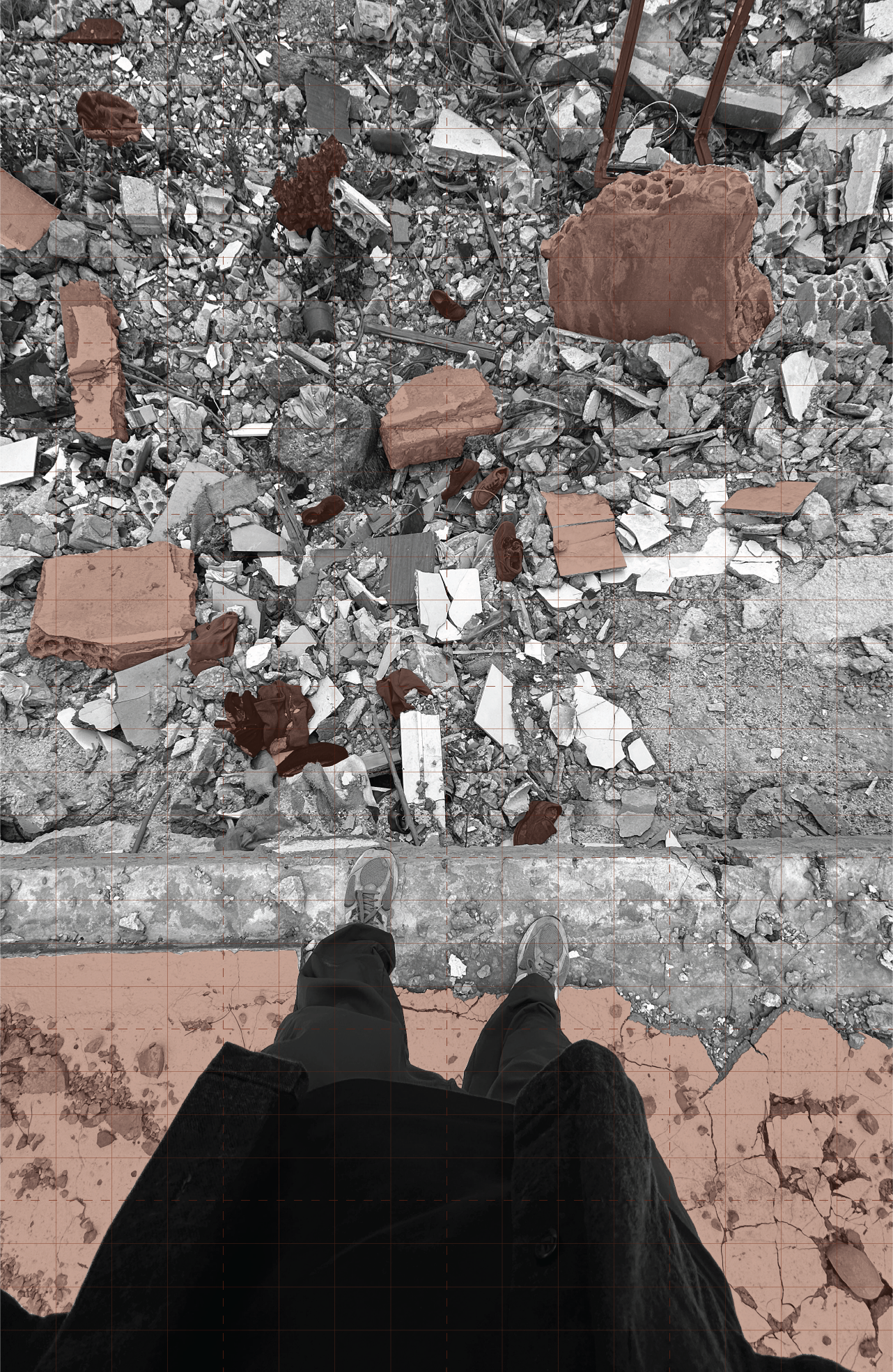
The initiative operates through an open catalogue of reconstruction guidance, composed of kits commissioned from selected architects, engineers, and experts. Rather than proposing a single reconstruction model, the catalogue expands the range of spatial, structural, and material options available to people rebuilding under constrained conditions.
Architecture for Return is an independent initiative focused on expanding access to architectural guidance within household-level reconstruction processes.
The project begins from a simple observation: reconstruction frequently starts at the household level, long before formal reconstruction systems fully materialize. Yet architectural guidance rarely becomes accessible at that scale in practical and adaptable forms. As a result, rebuilding decisions are often shaped by immediate necessity, familiar construction methods, available labor, and limited access to alternative possibilities.
Architecture for Return does not function as a reconstruction program, design firm, or centralized planning authority. Its role is to make architectural knowledge more accessible through a public catalogue of reconstruction guidance designed to support real rebuilding processes. All kits remain freely accessible, and the initiative operates independently of political agendas, state institutions, and commercial reconstruction entities.

Advisory Board
Architecture for Return is a public catalogue of reconstruction guidance.
An open, curated collection of reconstruction guidance kits developed by architects, engineers, researchers, and practitioners from around the world, and made freely available to the households, builders, communities, and organizations rebuilding after destruction.
-
A kit is not a construction document and not a finished design. It is a practical, usable body of architectural thinking addressed to a specific rebuilding scenario: a budget, a plot type, a household, a level of existing structure. It answers the questions a returning household actually faces. It is designed to be adapted, interpreted, and built differently by different hands in different places.
-
Each kit is commissioned. Architecture for Return identifies specific rebuilding scenarios, then selects an architect, engineer, or expert suited to it. Contributors are chosen. Every kit is credited in full to its author.
-
The households and local builders returning to rebuild. NGO field workers advising communities. Municipalities managing reconstruction at scale. Anyone making building decisions without access to an architect.
-
The kits are published in an open catalogue, organized so guidance can be found by scenario: a budget, a plot, a household, a level of existing structure. On the ground, that guidance reaches households through our partnership with municipalities, field teams, NGOs, and/or local contractors.
-
Every kit is open and freely available. The knowledge belongs to no one and to everyone. Authors are credited in all contexts.
Get in Touch
Questions about the initiative, the submission framework, or the open call are welcome. We will respond directly.